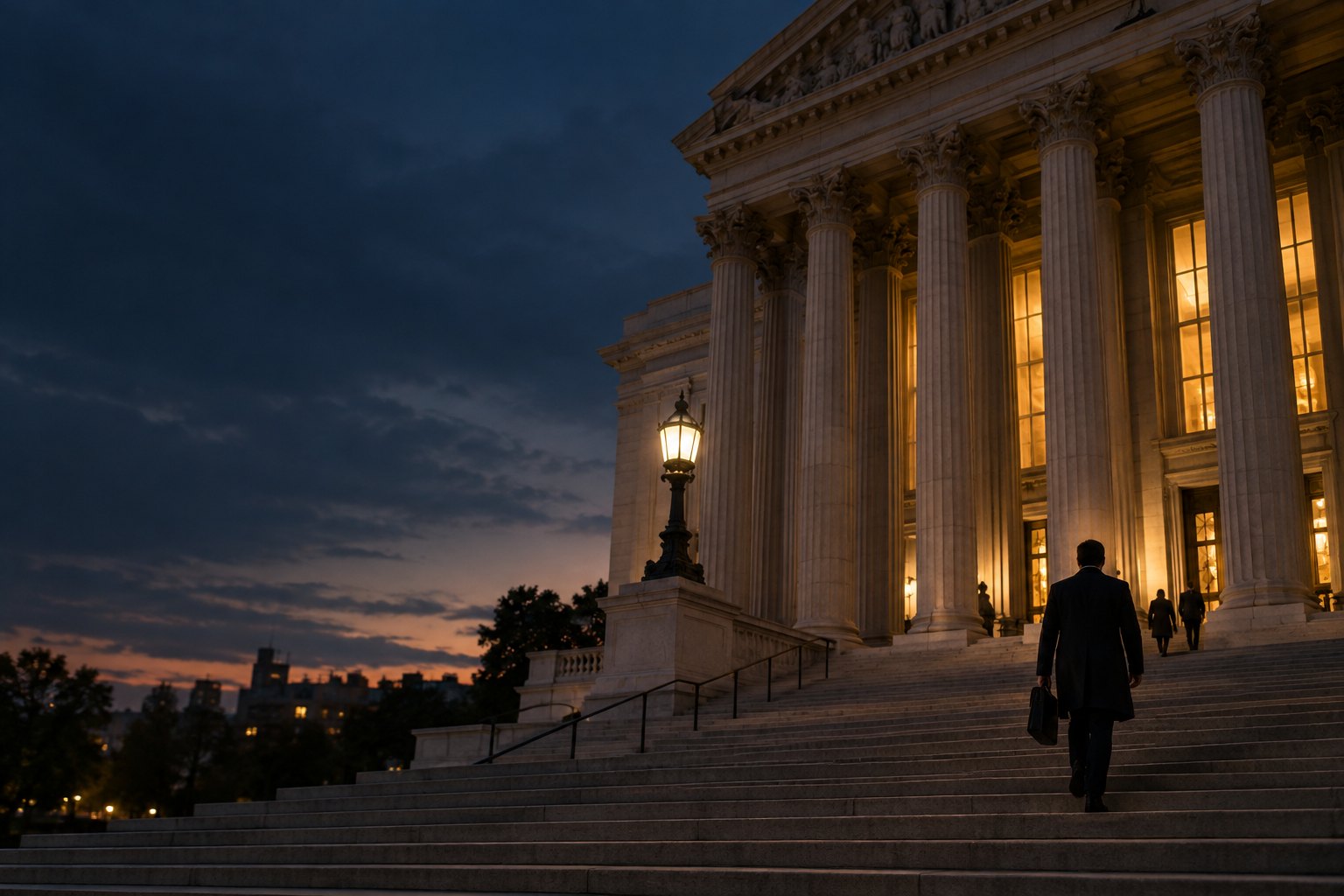
The Central Park Five: convicted in 1989, cleared in 2002, paid in 2014
Five teenagers were convicted in a 1989 New York case. In 2002 the convictions were vacated. It took until September 2014 for the City of New York to settle their civil rights lawsuit, for $41 million. It remains the best-known wrongful conviction settlement in the city.
A public record, not a client of this firm. Everything on this page comes from the court file, the government announcement or the reporting cited at the end. Usher Law Group did not represent anyone in this matter, we publish no results of our own, and nothing here predicts the outcome of any other case.
Five teenagers were convicted in a New York case in 1989. Thirteen years later, in 2002, the convictions were vacated. That is the whole of what the public record we rely on for this page says about the criminal side, and it is enough to explain the civil side: five people had spent years in prison on convictions that no longer existed.
They sued the City of New York. The case was fought for more than a decade. In September 2014 a federal judge signed off on a settlement of $41 million, paid by the City. Twelve years had passed since the convictions were vacated, twenty-five since the arrests.
The number is the largest wrongful conviction settlement the City has paid in a single case, and it is why the Central Park Five come up in every conversation about what a wrongful conviction claim is worth. The honest answer, which the settlement itself illustrates, is that the value is measured in years: five people, and for each of them the years between a conviction and its vacatur.
What the law calls it
A person convicted on evidence an officer fabricated has a constitutional claim, and in the Second Circuit the right not to be deprived of liberty on the basis of evidence fabricated by an investigating officer has been recognized since Zahrey v. Coffey, 221 F.3d 342 (2d Cir. 2000). A Fourth Amendment malicious prosecution claim needs only that the prosecution ended without a conviction (Thompson v. Clark, 596 U.S. 36 (2022)), and the claim accrues when the conviction is set aside (McDonough v. Smith, 588 U.S. 109 (2019)). The City is liable where a policy or custom caused the violation (Monell v. Department of Social Services, 436 U.S. 658 (1978)), which is the theory that reaches a city rather than only the individual officers.
New York also compensates the wrongly convicted by statute, Court of Claims Act 8-b: clear and convincing proof of the conviction, a qualifying reversal or dismissal, innocence, and that the claimant did not bring the conviction on himself; no cap; a two-year filing window. The statute and the lawsuit are different routes with different proof.
What it cost
The Central Park Five
Five wrongful convictions in a 1989 case, vacated in 2002. A federal judge approved the settlement in September 2014.
Source: Innocence Project. A public record of someone else's case, not a result of this firm and not a prediction.
What it means for you
If a conviction has been vacated, two clocks start on that day: the three-year federal clock for the Section 1983 claim in New York, and the two-year window for a claim under Court of Claims Act 8-b. They are separate claims with separate proof, and they can be brought together. Our wrongful conviction page explains the civil claims, and wrongful conviction compensation explains the statute.
The case also shows why the civil claim needs the whole criminal file: what was disclosed, what was withheld, and how the statements were taken. Fabricated evidence and coerced confessions explain the two claims most wrongful conviction cases are built on.
The pages this story points to
Wrongful conviction
The civil claims that begin when the conviction ends.
Read →Compensation statutes
New York's Court of Claims Act 8-b: the proof, the window, no cap.
Read →Fabricated evidence
The Second Circuit's Zahrey claim and Manuel v. City of Joliet.
Read →Sources. Innocence Project, "Judge signs off on $41 million settlement with Central Park Five" (September 2014); N.Y. Court of Claims Act 8-b (nysenate.gov); Zahrey v. Coffey, 221 F.3d 342 (2d Cir. 2000); Thompson v. Clark, 596 U.S. 36 (2022); McDonough v. Smith, 588 U.S. 109 (2019).
Common questions
Why did it take twelve years after the convictions were vacated to settle?
The civil case was filed after the vacatur in 2002 and litigated for more than a decade; the City settled in 2014. A wrongful conviction case is often two long cases in a row: first the fight to undo the conviction, then the civil claim about how the conviction was built.
Does New York pay wrongly convicted people without a lawsuit?
New York has a compensation statute, Court of Claims Act 8-b. A claimant must prove by clear and convincing evidence the conviction and imprisonment, a qualifying reversal or dismissal, innocence, and that the claimant did not cause the conviction; there is no cap, and the claim must be filed within two years. It is separate from a Section 1983 lawsuit against the city and the officers.
Tell us what happened.
One conversation with an attorney, in your language. We tell you which claims the facts support, which deadline runs first for the agency involved, what evidence to preserve this week, and whether a pending criminal case changes the timing. If it is not a case we can take, we say so and tell you where to go.
(718) 484-7510If a criminal charge is still open, talk to your defense lawyer before you describe the arrest to anyone, including us. English, Russian and Spanish in-house; an interpreter for any other language. Contingency fee, confirmed in writing before we begin.